
Why a gap analysis?
A gap analysis compares the current state of your management system with the requirements of a standard. It is the classic first step before certification, when moving to a new edition of a standard or when adding another standard – for example ISO 27001 alongside an existing ISO 9001 system.
Done manually, it means laying the standard next to your documents, checking clause by clause and copying results into a spreadsheet. That takes days and is quickly outdated. docxpert automates the legwork and leaves the judgement to you: AI finds evidence and gaps, you decide what applies.
How the gap analysis works
- 1
Choose standard and scope
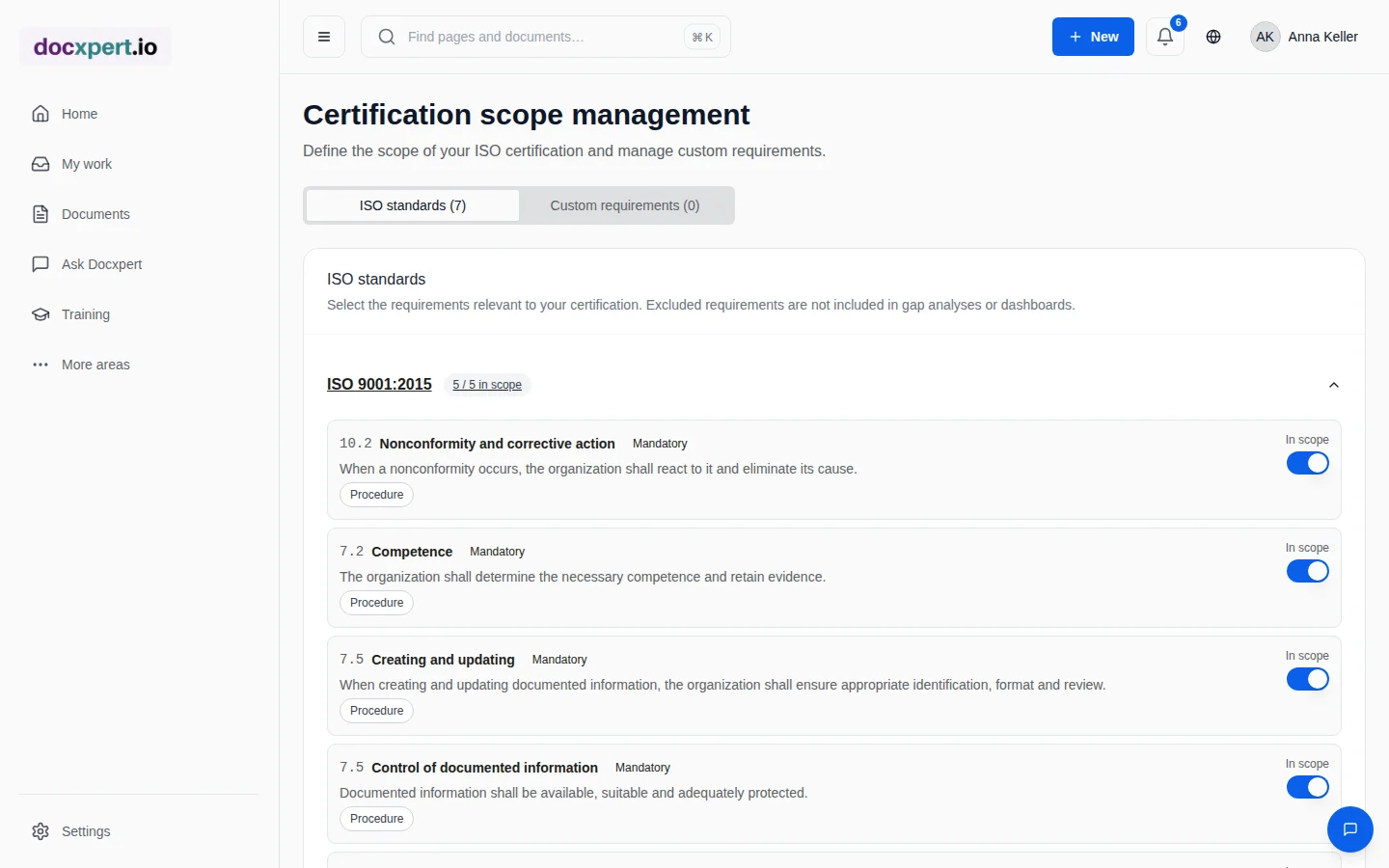
You select one of your active standards. In the certification scope you define which requirements apply; excluded requirements are not assessed.
- 2
Quick scan or deep analysis
The quick scan gives a fast overview across all documents. The deep analysis examines documents individually and more thoroughly and runs in the background.
- 3
Review the result
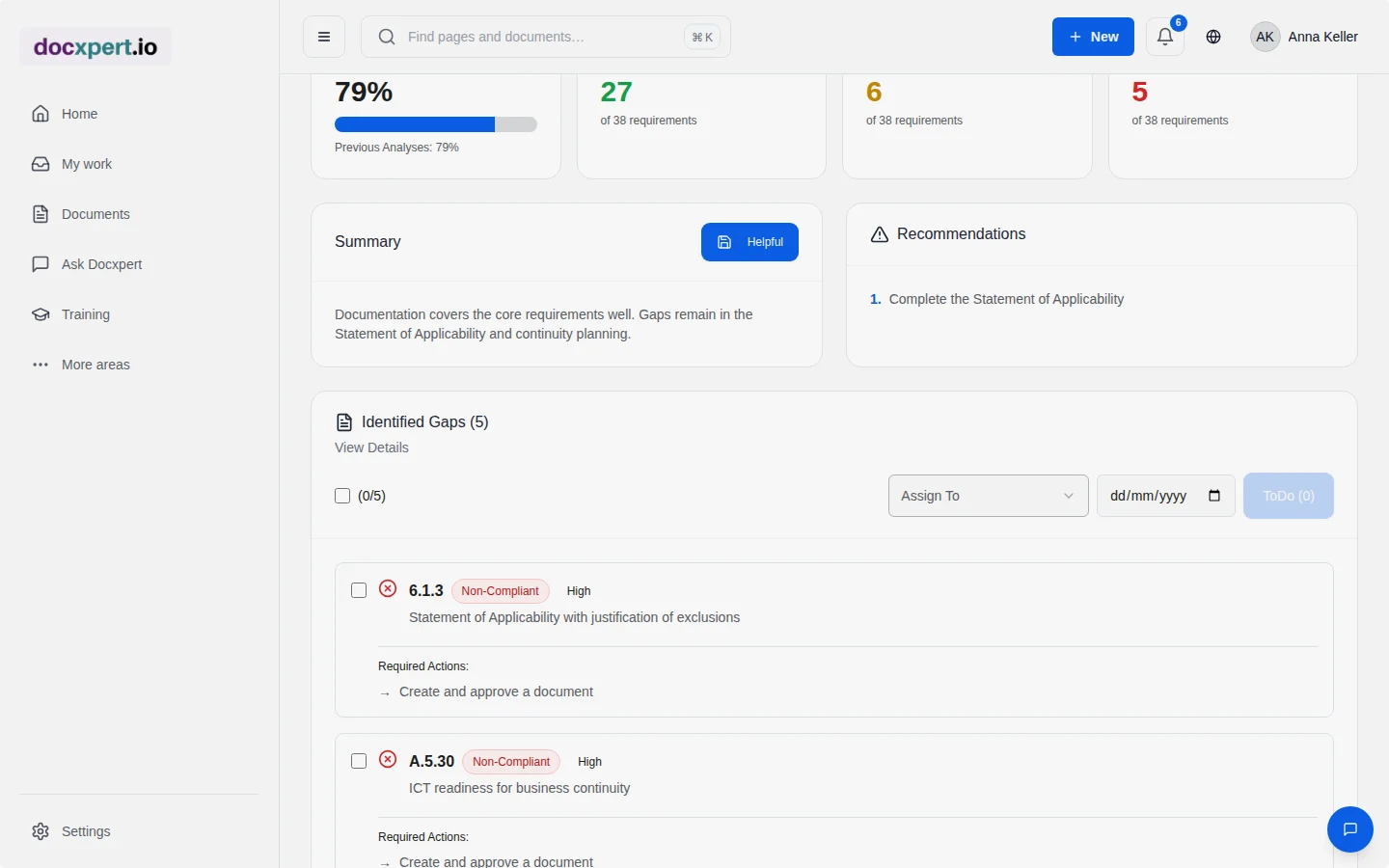
You see coverage, covered, partially covered and missing requirements, a summary and recommendations. Every gap shows clause, priority and existing evidence.
- 4
Turn gaps into tasks
Select gaps and create tasks with owners and due dates. They appear in the personal inbox.
- 5
Measure progress
Later analyses show a comparison with the previous one – so you see how coverage develops.
Features at a glance
Supported standards and regulations
The gap analysis works with the standards active in your workspace. Supported are, among others:
| Area | Standards and regulations |
|---|---|
| Quality | ISO 9001, IATF 16949, AS9100D, ISO/IEC 17025 |
| Medical devices | ISO 13485, ISO 14971, EU MDR, FDA 21 CFR 820 |
| Environment and health and safety | ISO 14001, ISO 45001 |
| Information security and privacy | ISO 27001, ISO 27701, ISO 22301, NIS2, Cyber Resilience Act |
| Artificial intelligence | ISO 42001, EU AI Act |
Reading the results
| Rating | Meaning | Typical action |
|---|---|---|
| Covered | An approved document clearly meets the requirement. | Check the evidence, record the mapping in traceability |
| Partially covered | The requirement is addressed, but parts are missing, such as responsibilities or deadlines. | Complete the existing document in a new version |
| Nonconforming | There is no recognisable evidence. | Create a document from a template or plan the evidence |
High coverage is a good sign, but not an end in itself. Pay particular attention to high-priority gaps: they usually concern requirements that will certainly be checked in the certification audit, such as scope, policy, risk assessment or corrective action.
Close gaps quickly
A gap analysis is only as good as what happens next. docxpert connects the result directly with the tools to close the gaps:
- Missing mandatory documents are created from the template library – tailored to your company and standards.
- Partially covered requirements are completed with a new version of the existing document; the compliance check shows what is still missing.
- Missing evidence such as training or audits is planned directly as a task.
- Mappings between requirement and document are recorded in traceability.
Example: adding ISO 27001 to an existing QMS
A software company with ISO 9001 wants to add ISO 27001. The first quick scan shows 58% coverage: document control, competence and internal audits are already well covered by the QMS. The main gaps are the Statement of Applicability, the risk treatment plan and business continuity controls.
The team creates the missing documents from templates, assigns tasks with dates and repeats the analysis after six weeks: 79% coverage, with the remaining gaps scheduled. The figures feed into the management review and the project plan towards the certification audit.
Tips for meaningful results
- Define the certification scope before the first analysis and exclude non-applicable requirements with a justification.
- Use the quick scan regularly to measure progress, and the deep analysis before important milestones such as the internal audit.
- Confirm or reject findings deliberately – the reasoning helps you explain decisions in the audit.
- Combine the gap analysis with the certification readiness checklist to check evidence in practice as well.
Frequently asked questions
How often should I run a gap analysis?
Before certification every few weeks to measure progress, afterwards after significant changes to documents or standards and at least once a year before the internal audit.
What is an ISO gap analysis?
A gap analysis compares the current state of your management system with the requirements of a standard and shows where documents, processes or evidence are missing.
How long does a gap analysis take in docxpert?
The quick scan gives an overview within minutes. The deep analysis runs longer in the background, depending on the number of documents.
Does the gap analysis replace an internal audit?
No. It mainly checks documents. Whether processes are lived and effective only shows in an internal audit with interviews and samples.
Can I add my own requirements?
Yes. Besides standard requirements, you can add your own, such as customer requirements, to the certification scope.
Are results saved?
Yes. Earlier analyses are kept and serve as a comparison so you can see progress.
Does the gap analysis cost extra?
AI analyses use credits from your allowance. The free trial includes gap analyses for up to three documents.