_1762866128417-DS2_OO1j.png)
Why training records are so often flagged in audits
Almost every management system standard requires you to determine, ensure and evidence the necessary competence. In ISO 9001 it is clause 7.2, in ISO 13485 clause 6.2, in ISO 45001 clause 7.2. Auditors do not just check attendance lists – they check whether the right people had the right training at the right time, and whether it worked.
The most common gaps: training on outdated document versions, missing records for new starters, expired mandatory briefings and no effectiveness evaluation. More in our guide to training effectiveness.
Checkpoints
Competence requirements
Planning and assignment
Delivery and evidence
Deadlines and validity
Effectiveness
Reporting
How training software helps
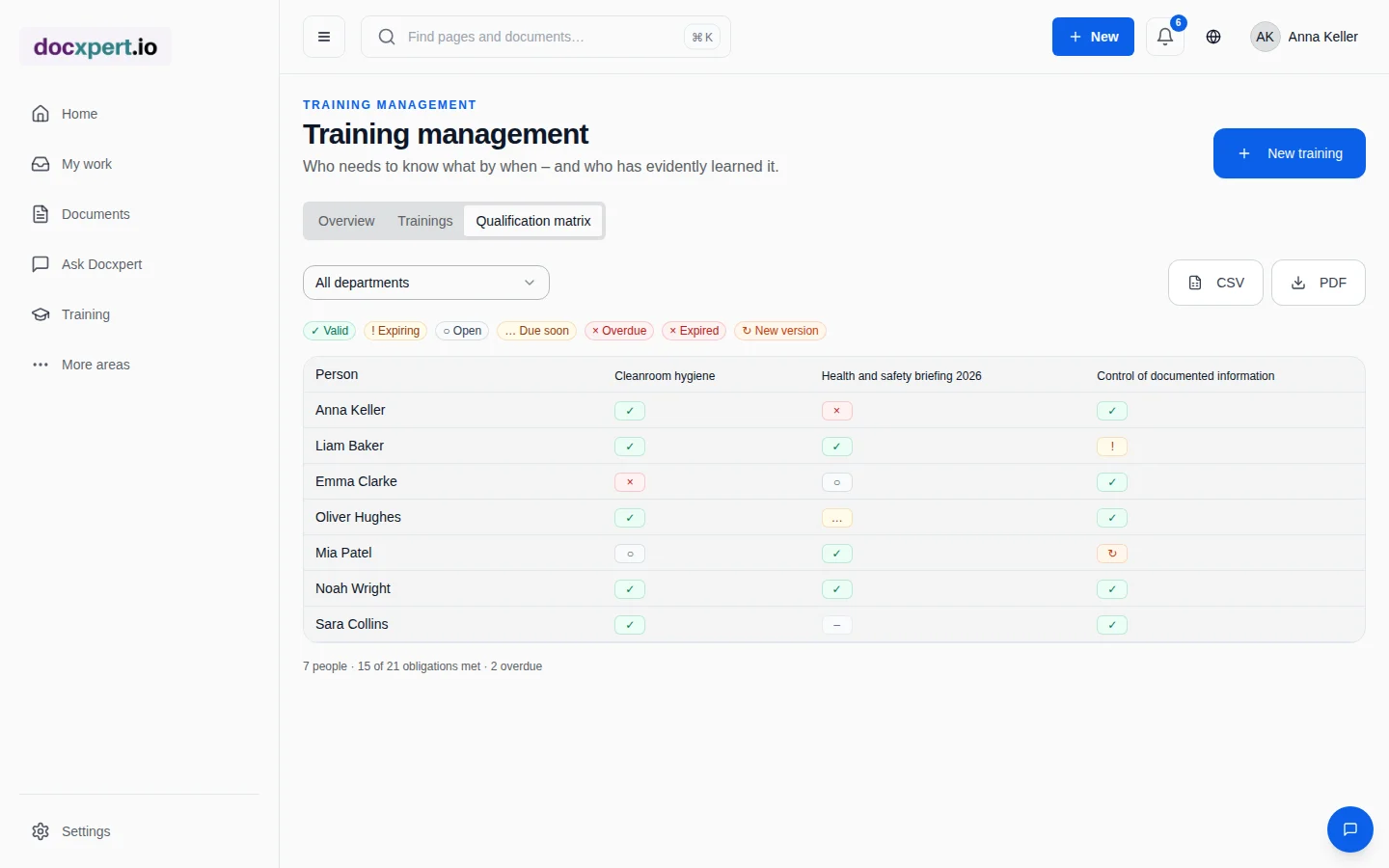
Training management in docxpert assigns training automatically by department, role or person, sends reminders before the deadline, escalates overdue items to line managers and schedules retraining as soon as a document gets a new version. Online quizzes, classroom sessions and external evidence all end up in a training matrix with export.
Download the checklist as PDF
Print-ready with tick boxes – ideal for your next audit or team meeting. Free; we also email you the link.
Frequently asked questions
How long must training records be kept?
The standards do not set a fixed period. Keep records at least as long as the person performs the activity, plus a buffer for audits and liability. Regulated industries often have longer statutory periods.
Is a signature on the attendance list enough?
It proves attendance, not competence. For important training, add a knowledge check or an assessment by the line manager.
Do temporary workers need training too?
Yes, if they perform work under your control. Competence requirements apply to everyone doing work on your behalf.