_1762866128417-DS2_OO1j.png)
When to use this checklist
Use the checklist when approving CAPA action plans and before closing a CAPA. Closure is the critical point: many CAPAs are closed as soon as the action is implemented – without checking whether the problem has actually stopped recurring. That is exactly what ISO 9001 clause 10.2.1 d) requires with the review of effectiveness.
The full flow is explained in our guide to the CAPA process; methods for finding causes are covered in root cause analysis.
Checkpoints
Intake and problem statement
Immediate action and containment
Root cause analysis
Action plan
Implementation and verification
Effectiveness check and closure
CAPA in docxpert
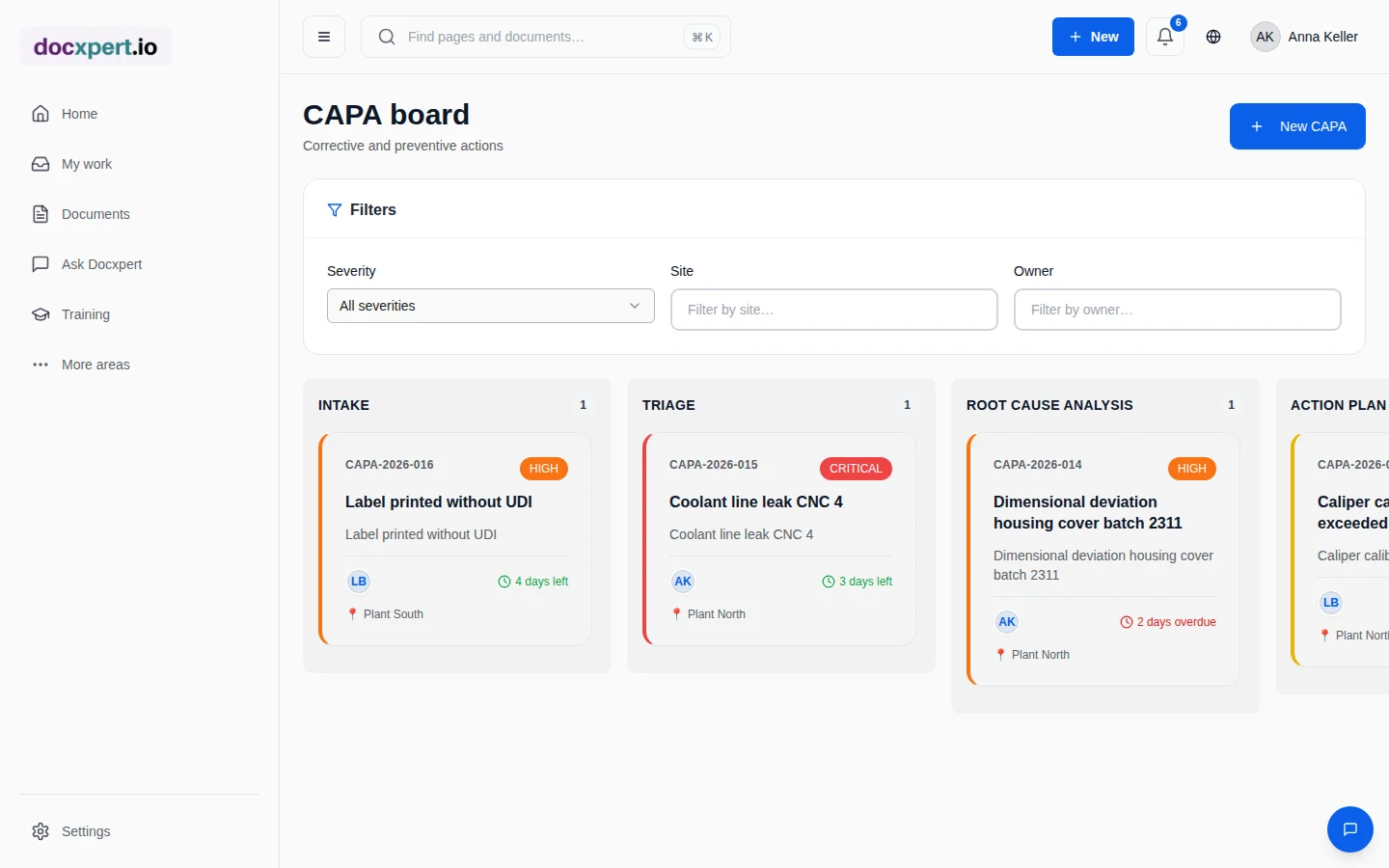
CAPA management in docxpert guides you through nine phases from intake to closure, with deadlines by severity, 5 Whys and Ishikawa analysis, actions and an effectiveness check. Deviations from deviation management can be linked to a CAPA directly.
Download the checklist as PDF
Print-ready with tick boxes – ideal for your next audit or team meeting. Free; we also email you the link.
Frequently asked questions
What is the difference between a correction and a corrective action?
A correction eliminates the detected nonconformity, for example by rework. A corrective action eliminates the cause so that it does not recur.
How long may a CAPA take?
The standard does not set a deadline. Define deadlines by severity – for example containment within 24 hours for critical cases – and monitor compliance.
Do I need a CAPA for every deviation?
No. Assess whether eliminating the cause is necessary. Recurring or serious deviations should always lead to a CAPA.